Taking healthy risks doesn’t have to be scary this Halloween

For adults and kids alike, it can feel frightening to try something new, but confidence isn’t built by avoiding every uncertain moment. It’s built by walking into something unfamiliar and coming out the other side.

First Tee coaches are trained to meet every participant where they are, then gently stretch what they believe is possible. They use games and activities than can be altered based on a player’s abilities, said Derek Clemmensen, director of programs at First Tee – Naples/Collier and a member of First Tee’s national Programs Council.

“If a youth is more advanced, we add layers to the challenge,” he explained. “In a chipping game, for example, we might ask them to pick their landing spot ahead of time instead of only focusing on where the ball finishes. If a participant is newer to the game, we broaden the target or simplify the task so they feel successful while they build that skill. The goal is the same for everyone: Each kid is stretched just enough to grow, and no one is stuck feeling bored or in over their head.”
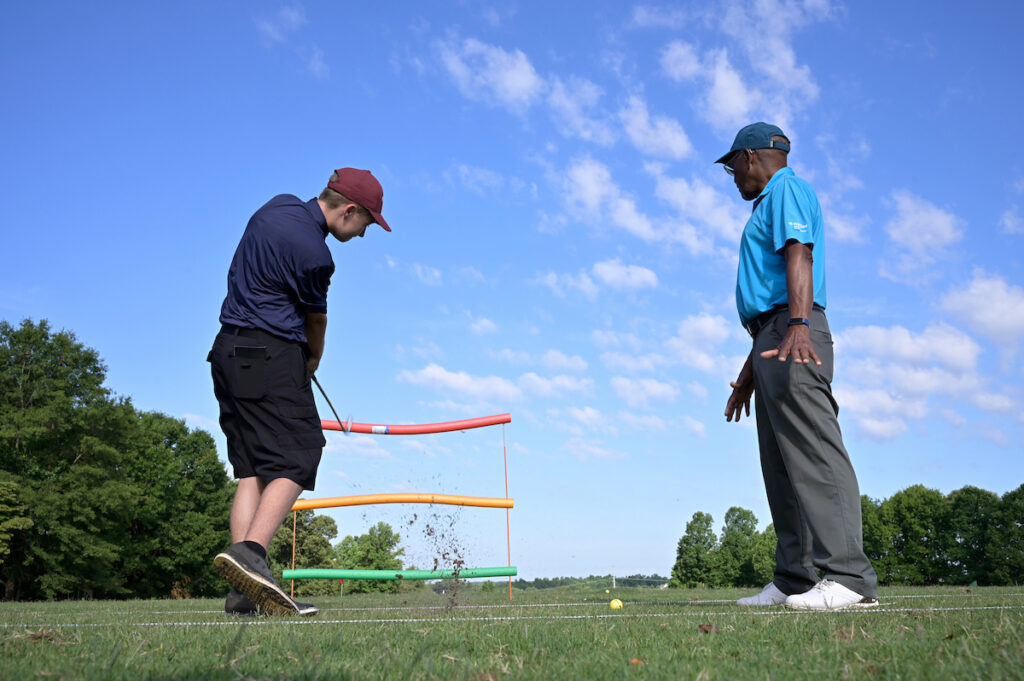
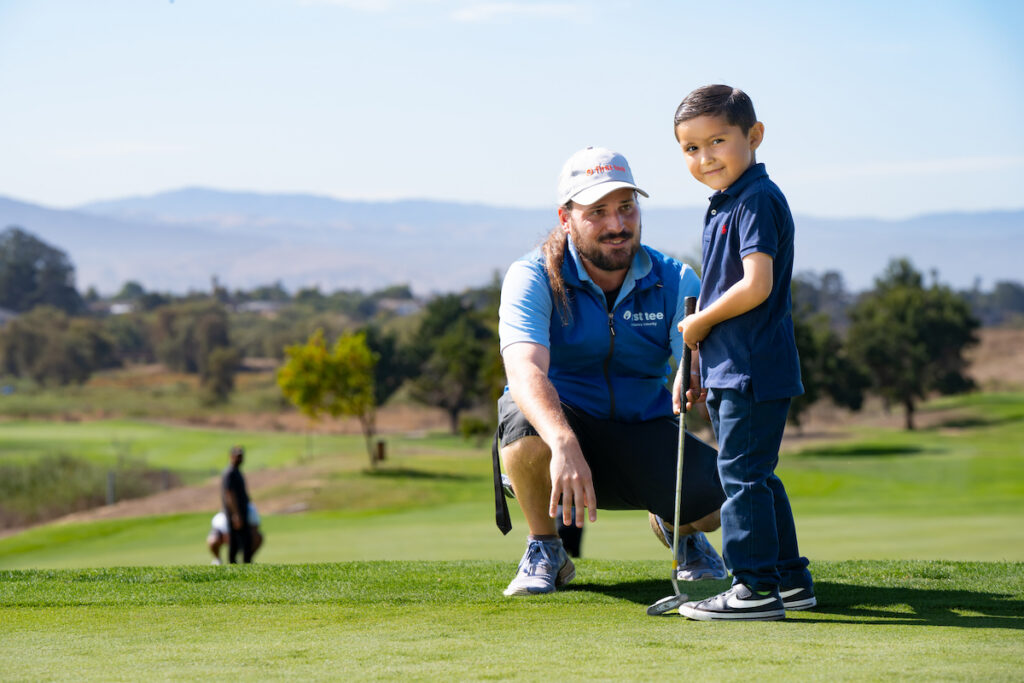
A coach works with a player on a chipping drill

Participants learn the three “I am” statements to help build positive self-identity:

  • I am finding my self-confidence.
  • I am discovering what I’m capable of.
  • I am safe to be myself.

“At First Tee, our coaches are trained to create an environment where kids feel safe, and that safety is what makes it possible for them to take on a challenging skill,” Clemmensen said. “They know their coaches and their peers are supporting them, so the uncomfortable moment still feels safe.”

Keep the goal attainable. Healthy risk-taking works best in small, manageable doses. A child who has never liked crowds doesn’t need to make it through the biggest haunted house in town to practice courage. Visiting a few neighbors for candy is its own accomplishment, and it’s more likely to leave your child with a positive memory of stepping outside of their comfort zone.
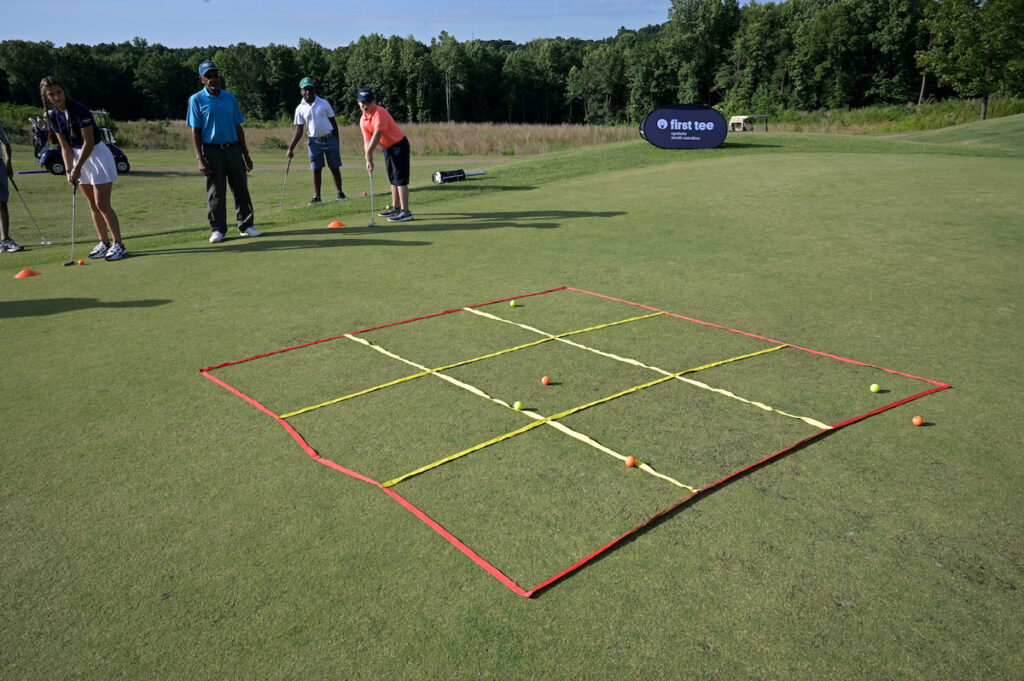
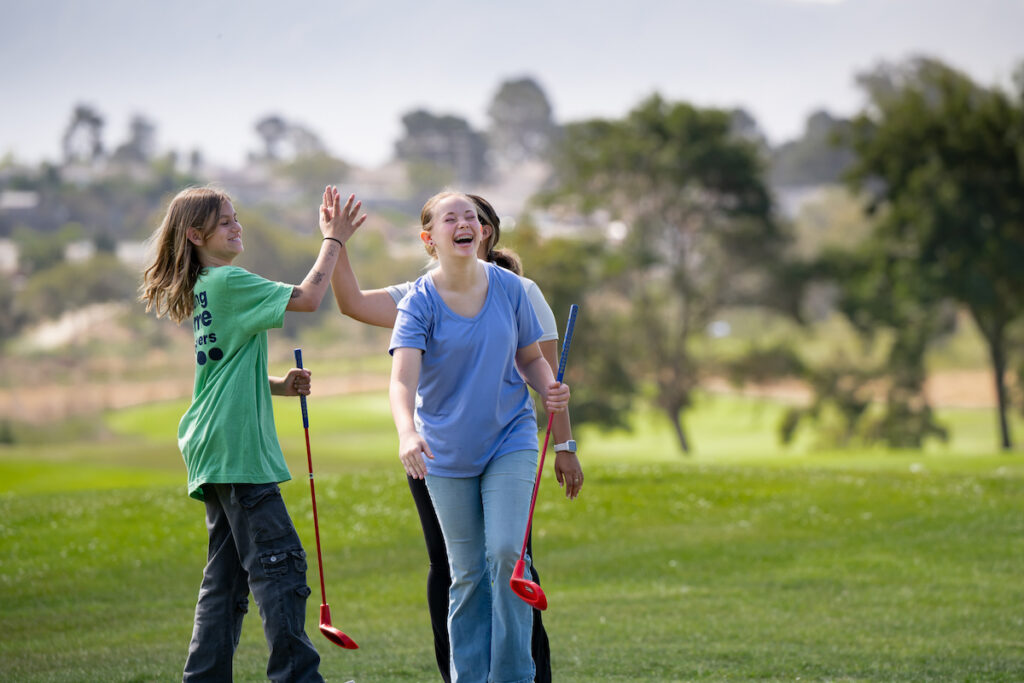
Kids play tic tac toe putting

Resist rescuing too early. “Feeling uncomfortable is a normal part of trying something new or difficult, and it’s often where the most growth happens,” Clemmenen said.

If a child hesitates at a neighbor’s door on Halloween or wants to turn back on the haunted trail, don’t force it. But it’s important to recognize that there’s a difference between genuine distress and productive discomfort. Most of Halloween’s risk lives in the second category, exactly where confidence gets built.

Follow with a debrief. “What was the scariest part, and how did you get through it?” It’s a quick conversation that reinforces to your child that they can handle new experiences. It turns a one-time thrill into a repeatable strategy for the next unfamiliar situation — a new school year, a new team or a new challenge on the course.

Find a First Tee program near you or learn about supporting our efforts to help kids build confidence and grow into game changers.
From shy camper to confident coach: Rebeka Filko’s First Tee journey 

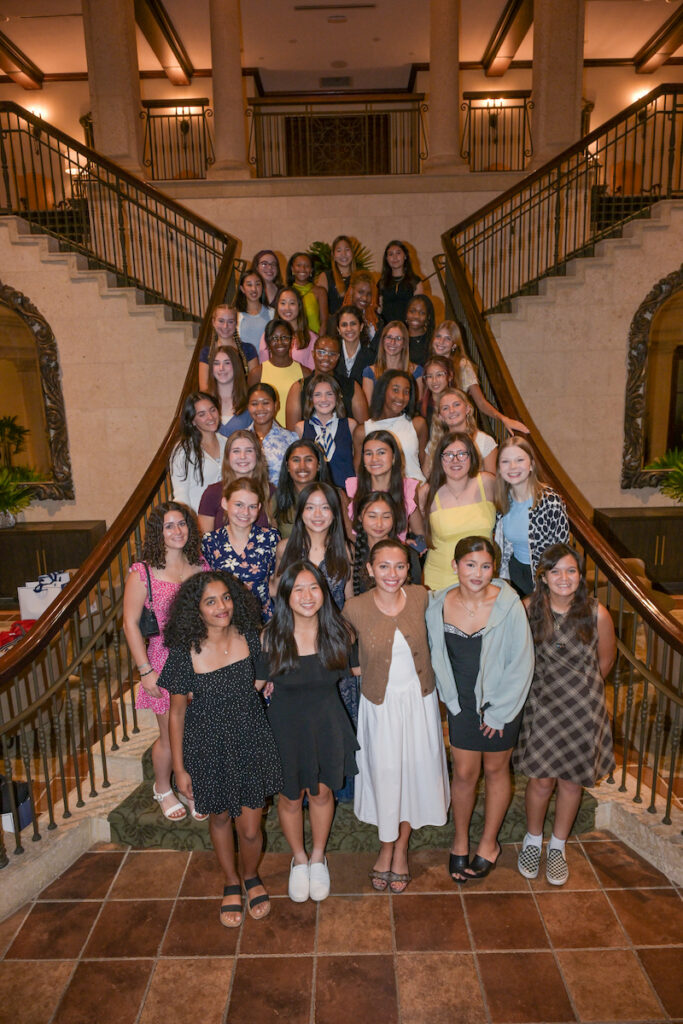
Thirty-six girls attended the 2026 First Tee Girls' Academy, with a welcome dinner at TPC Sawgrass.

When Rebeka Filko first stepped onto a First Tee – Sarasota/Manatee golf course, she was 6 years old, newly arrived from Slovakia and barely spoke a word of English. Her family was in town visiting from overseas, and her parents signed Rebeka and her sister up for Girls’ Golf Summer Camp. 

Nine years later, Rebeka is one of her chapter’s most dedicated junior coaches, a varsity golf team captain and one of this year’s First Tee Girls’ Academy participants. 

“I genuinely don’t think I would’ve achieved even half the things I have done if it wasn’t for First Tee,” she said.

Finding her voice 

Now a high school sophomore, Rebeka describes herself as a reserved kid growing up — so quiet that many of her classmates didn’t even realize she spoke English. First Tee became the place where that started to change, she said. 

“The coaches were always so open and bubbly, and they gave me the confidence to keep opening up,” Rebeka said. She decided she had two choices: stay quiet or push herself to connect with new people. She chose the latter, a decision she credits with reshaping far more than her golf game. 

Rebeka began volunteering as a junior coach at age 12 and now does so nearly every Saturday morning, helping lead games, teach fundamentals and keep classes on track.  

Leadership on and off the course 

Rebeka’s drive to serve others extends well beyond the golf course. She was central to launching the girls’ golf team at her middle school, helping to recruit and mentor teammates who had never picked up a club before.  

She now holds a leadership role in her school’s Fellowship of Christian Athletes chapter and volunteers with her church’s children’s ministry, where she says she’s learned what it really means to make someone feel seen.  

She further honed her leadership skills at the First Tee Girls’ Academy, where female mentors led workshops on topics like networking, building confidence and advocating for yourself and others. 

Rebeka aims to become a pediatric surgeon, a goal she’s already building toward with advanced coursework in math and science. She sees a direct line between that ambition and her years at First Tee. 

“Because of First Tee, I found my voice,” she said. “It gave me the confidence to build friendships with people that are now some of the best people, I have become a coach and even taken on leadership positions that I would have never even thought about.” 

Learn more about the First Tee Girls’ Academy and find a First Tee chapter near you. 

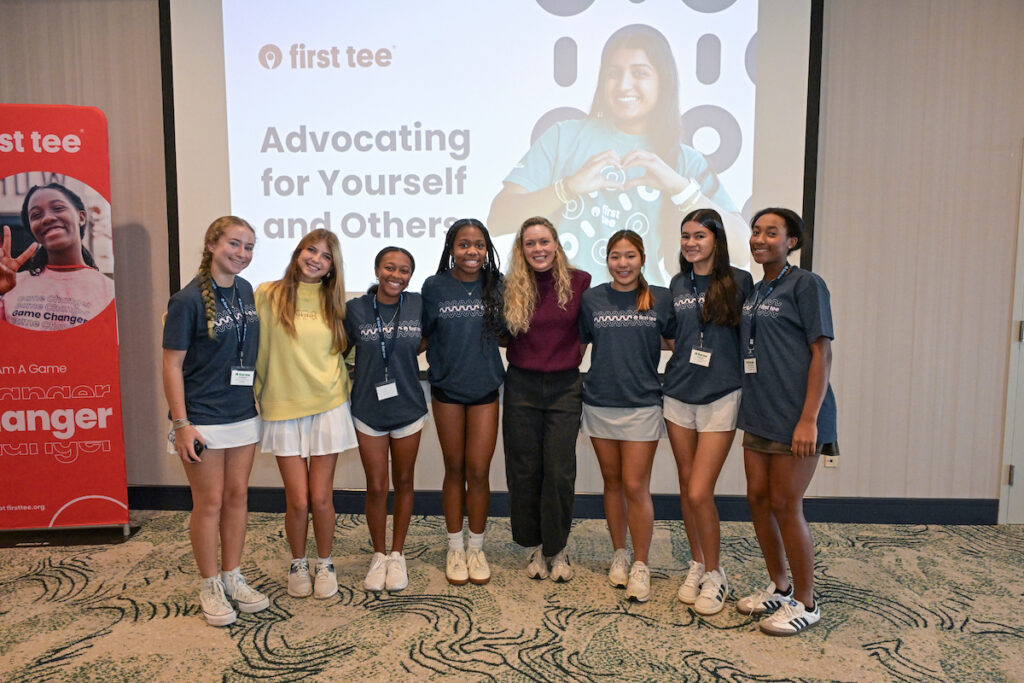
Attendees at the First Tee Girls' Academy pose with speaker Katie Goepel of the PGA Tour.

What fall tryouts teach us about resilience 

October means fall sports tryouts are wrapping up in gyms, fields and golf courses across the country — and for every roster that gets posted, there are kids who didn’t hear their name called. For parents, that moment can stir up lots of feelings. It can also provide a valuable learning opportunity. 

At First Tee, we see failure as a First Attempt In Learning. Even the very best golfers lost more than they win, and our coaches have seen plenty of missed putts and unlucky bounces. What we’ve learned is that how a child responds to disappointment matters more than the disappointment itself. 

“Resilience isn’t something young people discover after a setback,” said Kristin Westberg, senior director of program evaluation. “It’s something we build into our curriculum with intention at First Tee, so they are prepared to approach these moments proactively rather than simply react to them.”

A teenage boy hits an iron during a golf tournament.

Let them feel it before you fix it. It’s tempting to jump straight to solutions like private lessons, extra practice or a pep talk. But it can be beneficial to give disappointment a few moments to exist. At First Tee, we call this “Growing through Challenge,” and it’s one of the key commitments are participants make to themselves. Kids who are allowed to feel frustration without a parent rushing to smooth it over tend to process it faster, not slower. 

Reframe the setback before it becomes the story. In a child’s mind, “I didn’t make the team” can quickly translate into “I’m not good enough.” You can help interrupt that train of thought with questions like: 

  • What went well in tryouts? 
  • What can we work on for next time? 
  • What other opportunities could this open?

Separate effort from outcome, out loud. A tryout result is one data point on one day. Help your child set some goals within their control. For example, there’s no guarantee they’ll make the golf team on their next try, but they can still feel proud if they meet their standards – whether that means hitting 200 balls per week in practice or committing to a consistent pre-shot routine. 

Treat resilience as a skill. It might feel like some kids are naturally more positive or less competitive than others. But just because your child takes their sport seriously doesn’t mean they can’t learn to make the most of setbacks. Resilience isn’t a personality trait but a learned skill. Encouraging your child to take healthy risks, especially when success isn’t guaranteed, can show them it’s not only alright to fail or make mistakes, but it’s inevitable. You’re giving your child a gift by teaching them to cope with the resulting feelings when the stakes are low. 

Tryout season ends. But the skill of bouncing back will always be useful. 

First Tee teaches concepts like FAIL and other meaningful life skills through golf at more than 1,500 program locations across the country. Find a location near you or support our efforts by becoming a First Tee Ambassador.

How First Tee – Greater Pasadena found support after the Eaton Fire

First Tee - Greater Pasadena hosted community events for families impacted by wildfires

When the Eaton Fire swept through Altadena in January 2025, it left a lasting mark on the First Tee – Greater Pasadena community.

More than a year later, recovery is still underway. Some families have had no choice but to sell their homes and relocate. Local estimates suggest some homes in the area will not be rebuilt until 2028, and Altadena Golf Course remains unusable. As First Tee – Greater Pasadena program director Mark Fritz put it, “the community still has need for us as a chapter to provide our services and resources to families.”

Facing the loss of a program site and roughly $30,000 in equipment and supplies stored at Altadena Golf Course, the chapter moved quickly. Programming was paused for just two weeks before relocating to other local courses and parks less affected by the fire, including Brookside Golf Club and Eaton Canyon Golf Course, which returned to full operation by summer 2025. In total, the chapter relocated 70 percent of its programming and added three new sites, expanding its reach in the process.

Community coming together

Support from The Toro Company’s Growing the Game Through Access & Inclusion Grant played a direct role in that response, helping the chapter replace lost equipment and keep programs running for the families who needed them most. “This grant and funding from other golf organizations and supporters allowed us to not miss a beat,” Fritz said.

First Tee - Pasadena provided backpacks of gear to families impacted by wildfires

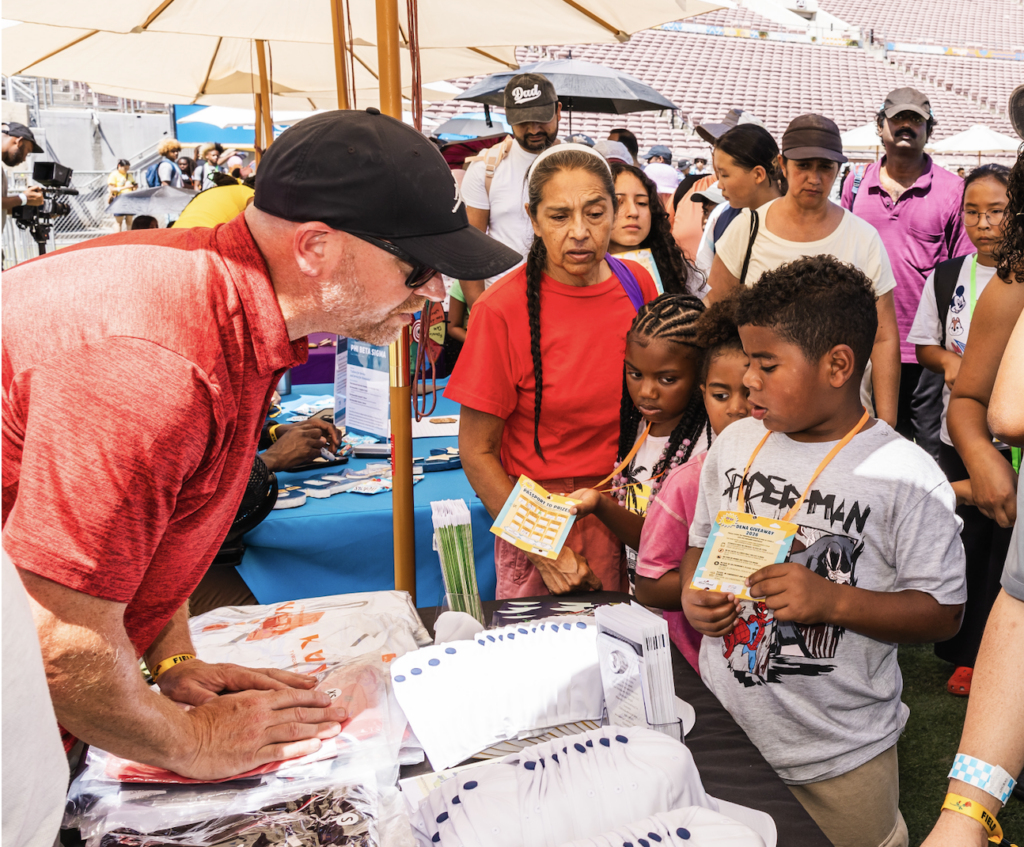
With support from The Toro Company, the chapter also used existing community touchpoints to reach displaced families. Through backpack giveaway events at the Rose Bowl and National Night Out, First Tee – Greater Pasadena has connected with families affected by the Eaton Fire and those attending Title I schools, promoting its program to more than 3,000 families this summer alone.

Nearby First Tee chapters across Southern California also stepped in to help: First Tee – Los Angeles offered programming space, while First Tee chapters in Orange County, Coachella Valley, San Diego and the Inland Empire organized club drives to help replace equipment for kids who lost gear in the fire. Local country clubs hosted donation days where members brought in used clubs, and Roger Dunn Golf Shops cut them down to fit young players. East West Bank funded a clinic and lunch for families who lost their homes, with more than 100 people attending the free event.

“This event demonstrated a very strong community collaboration involving the First Tee network and chapter supporters,” said First Tee – Greater Pasadena master executive director Bob Baderian.

Looking ahead

First Tee – Greater Pasadena is now planning to extend its reach further into the community it serves. In 2026, the chapter will launch a golf program with the Pasadena Unified School District, piloting at San Rafael Elementary with fifth graders. The program will culminate in a golf clinic at Brookside and a tour of the Rose Bowl. The chapter plans to bring the model to two to three additional PUSD elementary schools in 2026.

None of this recovery happened in isolation. From The Toro Company’s grant support to donated time, space and equipment from nearby chapters, businesses and community organizations across Southern California, First Tee – Greater Pasadena’s response to the Eaton Fire reflects what the chapter’s leaders describe as the strength of the First Tee community. As the Altadena community continues its long rebuild, that network of support remains in place.

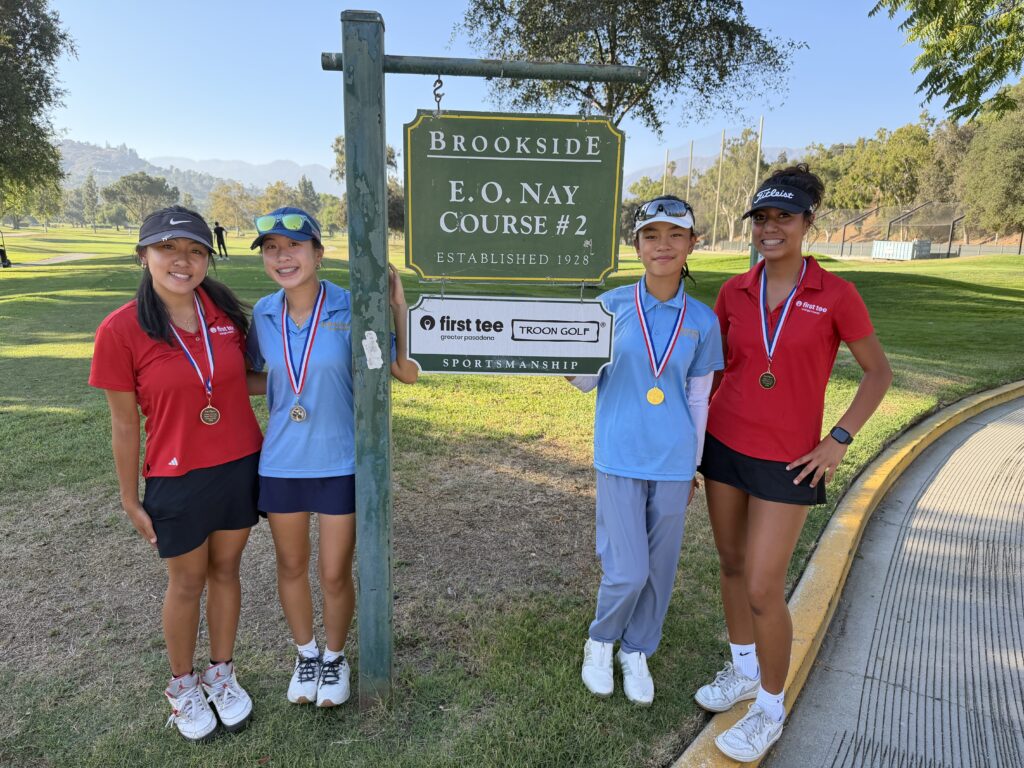
Winners of Greater Pasadena's Chapter Cup pose at Brookside Golf Course

Outcome isn’t everything: Help your child prep for their next tournament

Tournament season brings a familiar flutter of nerves, not just for the young golfers teeing it up, but for the parents watching from behind the ropes. It’s natural to want your child to play well. But the scorecard shouldn’t be the only measure of success. 

First Tee has always believed that golf is the vehicle, not the destination. Real growth lives in the way kids react to disappointment, bounce back after obstacles and treat their follow competitors. Here’s how parents can help their junior golfer step onto the course with the right mindset. 

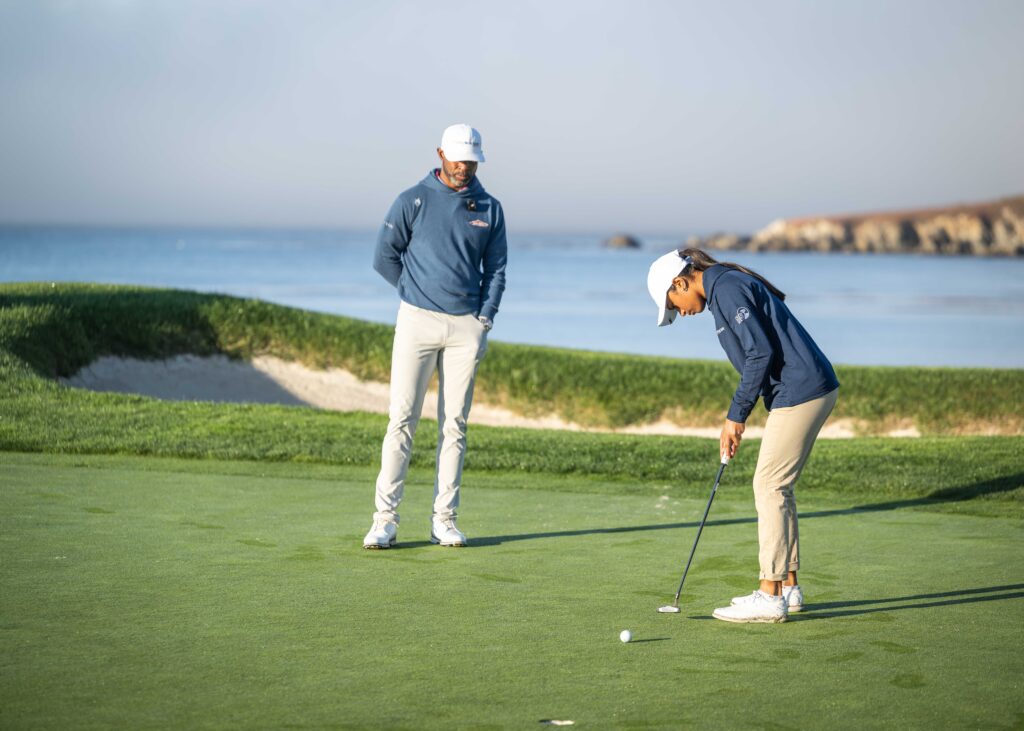
Girl putting on green

Normalize nerves, don’t try to erase them 

Nervous energy before a big round is not a problem to be solved. It’s a sign that something matters to your child, and that’s a good thing. Instead of trying to talk them out of feeling nervous, help them name it with statements like: “It makes sense that you feel that way. This is important to you.” 

Using the right language as the competition approaches can also be helpful. Avoid giving the tournament too much power by adding qualifiers like “big” and “important” when discussing it with your child. Most accomplished athletes would agree that one game or tournament won’t make or break a career. 

On the practical side, logistics can take over tournament day: Is the bag packed? What’s the tee time? Try discussing these things throughout the week so it doesn’t feel like you’re cramming the night before.  

Try zooming out too. Ask your child what they’re excited to experience – from seeing friends to trying a new shot or playing a new course. Not only can this help relieve pressure, but it’s also an important reminder that the score isn’t the only thing that counts. 

Process over outcome 

Junior golfers pick up on far more than instruction; they absorb how the adults around them respond to pressure and setbacks.  

Golf is a difficult sport, and the scorecard isn’t always a reflection or the effort and personal growth that took place during a round. Instead of focusing on numbers, commend your child for staying calm during a tough moment or treating their playing partner with respect. These are the moments worth celebrating and naming them out loud teaches your child that a good round and a good score aren’t always the same thing. 

If your child wants to talk after their round, listen first before offering perspective. If they don’t, that’s OK too. First Tee encourages teens to take ownership over their goals – maybe that means talking them through or processing internally. 

Years from now, your child likely won’t remember every shot from a junior tournament. What tends to stick are the feelings: the excitement, the camaraderie and the pride of overcoming tough moments. Celebrating those feelings, before, during and after the round, is one of the most valuable things a parent can offer on tournament day.

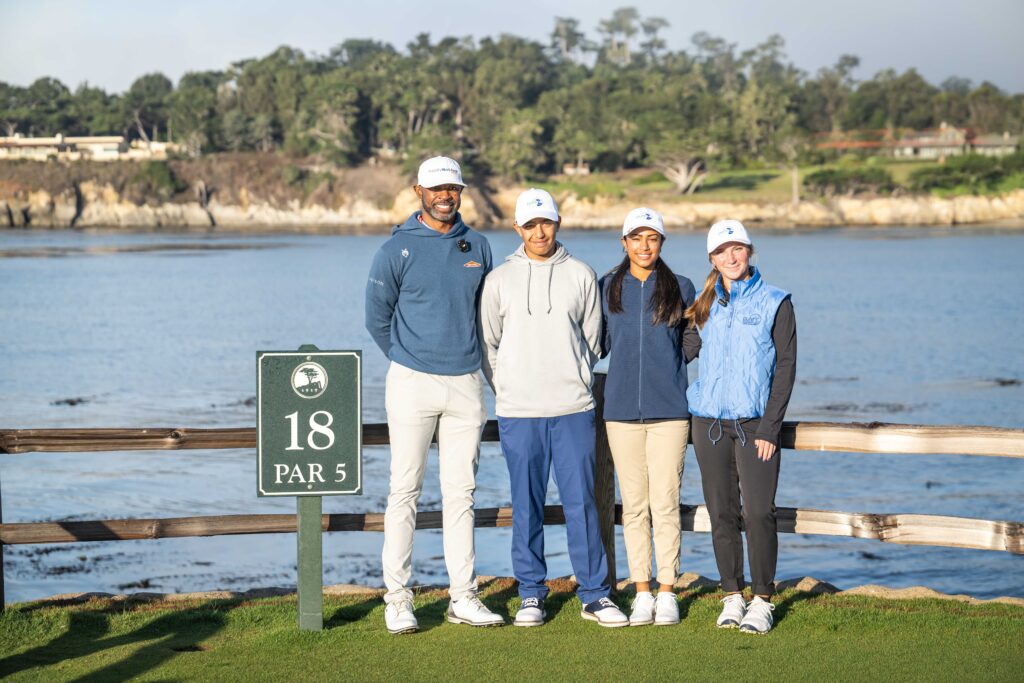
4 golfers posing for photo on hole 18

Talking to your child about new teachers, classrooms and nerves 

New school year, new teachers, new classrooms, new seat assignments, maybe even a new school altogether. For a lot of kids, all that “new” adds up to one familiar feeling: nerves. 

As parents, it’s tempting to smooth things over with a quick, “You’ll be fine!” But some of the most valuable conversations happen when we slow down and make space for nervousness instead of rushing past it.  

Honesty and respect are two of the lessons First Tee coaches aim to instill on the golf course, and they can be really valuable when it comes to addressing nerves heading into a new school year. 

Encourage honest conversations 

On the course, coaches encourage kids to be honest about their score, even when nobody’s watching and even when the number is not what they hoped for. That same kind of honesty is useful at the kitchen table in August. 

Asking open-ended questions that inspire thoughtfulness can help kids better understand and process their feelings about a new school year. Try questions like: 

  • “What’s one change you’re looking forward to about the new school year?” 
  • “What’s one thing that feels a little uncertain right now?”  

Honesty goes both ways in these conversations. Kids pick up when parents are anxious too — about carpool logistics, new schedules, a PTA role. Naming your own small uncertainties shows that nerves are normal and nothing to hide. 

One important thing for parents to remember is that change is part of growing up, not a problem to fix. Show respect for your child’s feelings with phrases like: 

  • “It’s normal that this doesn’t feel easy yet. Most things don’t feel easy on the first try.” 
  • “You don’t have to have this figured out by Friday. Give it a few weeks.” 
  • “Feeling a little nervous doesn’t mean something is wrong. It just means it’s new.” 

That kind of language takes the pressure off kids to perform confidence they don’t feel and gives them permission to grow into the new situation the same way they grow into a new golf skill: with repetition, not perfection. 

It’s important to teach kids that no one gets everything right. At First Tee, we view failure as the First Attempt In Learning. Mistakes happen and help us improve next time. 

The bigger picture 

Here are some questions to try in the car or at dinner as your child settles into their new routine: 

  • “What’s something your new teacher does differently than last year?” 
  • “Who did you sit with today and what did you learn about them?” 
  • “What’s one thing you handled today that felt a little hard?” 
  • “How can I help you get ready for tomorrow?” 

The goal is not to eliminate their nerves but to help them build a habit of being honest about their feelings, a skill that will serve them into adulthood.  

Building a positive self-identity provides kids with confidence to navigate challenges, setbacks and social pressures throughout life. When children learn to see themselves as capable, valued and worthy of respect, they’re more likely to form healthy relationships and take on new opportunities.  

Find a First Tee location near you.

You don’t have to be a golfer to support one: A guide for non-golfing parents 

Even if you’ve never held a golf club, or you don’t know a birdie from a bogey, that doesn’t mean you don’t play an important role in your child’s golf career. 

Some of the most supportive First Tee parents we’ve ever seen have never set foot on a course themselves. Because what your child needs from you has very little to do with whether you can hit a fairway. 

Golf can feel intimidating from the outside. It has its own language, etiquette and a large rulebook. But it’s not your job to master it. Your job is to show up, pay attention and let your child know that what they’re doing matters to you. 

Let your child be the expert 

One of the unexpected gifts of being a non-golfing parent is that your child gets to teach you something. When they explain the rules, walk you through their swing or describe what they worked on at practice, they’re building confidence and communication skills right alongside their golf game. 

Take advantage of your commute home to ask questions and be curious. You might be surprised how much your child lights up when the roles are reversed. This can also be a great time to discuss how the skills your child is learning on the course can translate to growth in the classroom, with friends or at home. 

Cheer for the right things 

In golf, the scoreboard doesn’t always tell the full story, especially for young players who are still learning the game. Things like staying composed after a tough hole or helping a fellow participant find their ball are both forms of success. 

When you pick up your child after a class or round, try asking, “What did you learn?” instead of, “How did you shoot?” Those questions signal that you’re paying attention to who they’re becoming, not just how they’re playing. 

There are also ways to support your child’s without being a standout player yourself. For example, if they want to achieve a certain score or make a high school or collegiate golf team, you could help them build a goal ladder, breaking down their dreams into achievable actions. 

The values are the point 

First Tee uses golf as a vehicle to teach values and life skills. Your child is practicing these every time they step on the course, and you can help reinforce them everywhere else. 

When your child is frustrated with a friend, that’s a conversation about courtesy and respect. When they want to give up on something hard, that’s a moment to talk about perseverance. When they make a mistake and own it, that’s integrity in action. You don’t need to know golf to recognize those moments and name them for what they are. 

If you’ve ever worried that your child is missing something because you can’t teach them the game yourself, let that go. First Tee has coaches for that.  

What your child needs is a supporter who asks good questions, celebrates growth over results and makes it clear that who they are matters more than any score. You’ve got that part covered. 

First Tee – Triangle’s Arianna Beverly reflects on the opportunities she’s earned through golf

When Arianna Beverly was six or seven years old, her dad signed her up for First Tee. She liked the little games well enough, but she wasn’t exactly serious about it. Then the world stopped, and golf became everything.

“COVID hit, and all we could do was play golf,” Arianna said. What started as a casual activity gradually became a lifelong passion.

Now a rising senior and member of the First Tee – Triangle community, Arianna just competed at the 2026 First Tee National Championship at Finley Golf Club in Chapel Hill — the same course where she recently attended a skills session as part of the PGA TOUR’s Pathway to Progression program. This week, she also stepped into a different kind of spotlight, moderating a conversation with player and golf personality Will Lowery at the championship’s welcome dinner.

A pathway opens

Arianna was invited to join Pathway to Progression at last year’s First Tee National Championship at the University of Notre Dame, where she played a practice round with Kenyatta Ramsey, vice president of player development at the PGA TOUR.

She won a qualifying tournament at Bally’s Golf Links in New York, “a very nice golf course, a different kind of experience,” she said. From there, the program brought her back to familiar ground: Finley Golf Club for sessions with coaches who helped with her swing, offered drills and talked through course management and the more technical aspects of the game. Through the program, she played her first AJGA tournament, a senior showcase in Las Vegas, and competed in a second AJGA event as well.

PURE Insurance Championship and Stewart Cink

If you ask Arianna about her favorite golf memory, there’s no hesitation.

“Playing at Pebble Beach. It was just the best experience of my life,” she said. “When I’m old and gray, I’ll still be reminding myself that I went to Pebble Beach and played with Stewart Cink.”

She competed at the 2025 PURE Insurance Championship at Pebble Beach Golf Links, where she was paired with the PGA TOUR veteran. The experience left a lasting impression. “He still gives me little bits of advice,” she said. “I learned so much from him about course management. I was just pampered by everyone at that tournament.”

More than a golfer

Off the course, Arianna is vice president of her school’s Black Student Association, a National Honor Society member and a jewelry entrepreneur. She started making earrings during COVID as a creative outlet, inspired by a find on Pinterest and encouraged by her crafty family. As her skills improved, her dad convinced her to turn her hobby into a small business. Her Christmas gingerbread men and cupcake designs have been particularly popular.

Before she heads off to Japan on an upcoming school trip, Arianna is also looking ahead to the next chapter: college golf, ideally at an HBCU, and a degree in marketing.

The impact of First Tee

Through new environments and everything that comes with growing up, one thing has remained constant.

“First Tee has been the steadiest thing in my life,” Arianna said. “That’s something you need when you’re changing schools and meeting new people. I always know I have my friends at First Tee.”

She also credits the organization with something she didn’t expect when she first teed it up as a kid: social confidence.

As she prepares to graduate in 2027, Arianna sees golf not just as a sport but as the throughline of her life — past, present and future. “Through First Tee, I’ve fostered my love for the game. Everything I’ve done in the golf world has been because I found that love through First Tee. It’s going to get me into college, into the next chapter of my life, and I’m going to keep it throughout my adulthood because of what happened when I was six.”

Veronica Diaz shares how First Tee – Connecticut helped prepare her for a life of service

When Veronica Diaz joined First Tee – Connecticut around age 8, she found not only a sport, but a place to practice values like honesty, integrity and perseverance. Years later, those values are essential to her career in law enforcement.

Today, Veronica serves as an officer with the Mashantucket Pequot Tribal Nation Police Department, where her work spans patrol, investigations and community service. It’s a career that demands composure under pressure, accountability and genuine care for the people around her — qualities she traces directly back to her time with First Tee.

“The values of honesty, integrity, respect and perseverance are things I use every day as a police officer,” she said. “Golf teaches you accountability because there is no one else to blame for your score, and First Tee reinforced that mindset.”

She credits her First Tee Coach, Coach Lindsey, for teaching her the importance of showing respect, making confident eye contact and offering a firm handshake — small things that turned out to matter enormously. “Those simple lessons have never left me,” she said. “They are values I continue to carry with me today and pass on to others whenever I can.”

Veronica’s path from First Tee participant to law enforcement officer saw her through four years of high school golf, Division III collegiate golf, summers coaching in the program and a serious car accident that reshaped how she thinks about time and the people she shares it with. “It reminded me how quickly time can pass and how important it is to spend time doing the things you love with the people you care about most,” she said.

Her nephew is now a First Tee participant through the Waterbury Police Activity League, the same PAL program that first connected Veronica to golf and the officers who inspired her career choice.

Reuniting at the Travelers Championship

This year, Veronica joined fellow First Tee alumni at a special meetup hosted during the Travelers Championship, made possible by the generous support of PGA TOUR Superstore. The gathering brought together alumni from across the First Tee network to reconnect, reflect and celebrate how far they’ve come.

“First Tee was such an important part of my childhood, so being able to reconnect with fellow alumni and see how everyone’s journeys have unfolded is special,” she said. “It’s also a great reminder of the impact the program has had on so many people.”

A message to the next generation

When asked what she’d say to a First Tee participant just starting out, Veronica’s answer was simple: Don’t be afraid if you don’t have everything figured out yet.

“The skills you’re learning through First Tee go far beyond golf and will help you no matter what path you choose,” she said. “Some of the experiences that shape your future may come from places you least expect. First Tee certainly did that for me.”

How to watch your child play golf without adding pressure 

Tournament season is here, and if your child is competing in junior golf this summer, you’re probably already thinking about how to show up for them. 

Your presence matters. Research consistently shows that parental support is one of the biggest factors in whether a young athlete has a positive sports experience. But there’s a version of support that helps kids thrive, and a version that can add weight to an already pressurized moment. The difference isn’t always obvious, especially when you love your kid and want them to succeed. 

Kids are remarkably perceptive. They notice the furrowed brow or slumped shoulders after a missed putt. They feel the silence in the car ride home. What they might not understand, however, is that you’re feeling disappointed for them – not disappointed in them. 

Your child wants to know that you care. But during competition, that awareness can work against them. When kids sense that a parent’s mood is tied to their performance, they start playing for the wrong audience. Instead of focusing on the shot in front of them, they’re managing your reaction, and that’s an enormous cognitive and emotional load for a young person to carry. 

What helpful presence actually looks like 

The good news is that being a supportive presence doesn’t require you to suppress your emotions. It just requires a small shift in focus. 

Before the round, keep it simple. Remind your child that you’re proud of them for competing, full stop. 

During the round, resist the urge to coach from the gallery. Even well-intentioned tips mid-round can disrupt a young golfer’s concentration and signal that you’re focused on outcomes rather than effort. Let them play and problem-solve. 

While athletes can learn from mistakes, avoid offering critiques right after a round when emotions are raw. Instead, try leading with curiosity. Prompt reflection with questions like: 

  • How did you feel? 
  • How were the conditions? 
  • What was the best moment of your round? 
  • What did you learn today from your round? 

Let the hard moments do their job 

Competitive golf is full of adversity … missed putts, bad bounces, tough weather. These moments feel painful in the short term, but they’re also exactly where some of the most important development happens. 

At First Tee, FAIL stands for First Attempt In Learning. The idea is that setbacks aren’t signs of failure but part of the process. When kids are allowed to sit with a hard moment, reflect on it and try again, they build something no coaching tip can give them: genuine resilience. 

Your role in those moments isn’t to fix the feeling or explain away the disappointment. It’s to stay calm, stay present and let your child know that your love isn’t contingent on the scorecard. 

What junior golfers often need most from their parents is the freedom to compete, take risks, make mistakes and figure things out in real time. 

Find a First Tee chapter near you to learn about competitive golf opportunities. 

How to balance structured and unstructured time this summer

A guide for parents navigating the summer schedule 

Summer arrives with the best intentions. You want your child to grow, make memories and maybe even get a head start on something meaningful. So you sign them up — camp here, lessons there, a program or two to keep things moving. Before long, the calendar is full and summer feels a lot like the school year with warmer weather. 

Sound familiar? 

Finding the right balance between structured activities and free time is one of the most common challenges parents face when summer rolls around. There’s no perfect formula, but there is a lot of research that can help. 

The case for structure 

Structured activities give kids something school schedules naturally provide: routine, accountability and a sense of purpose. When children commit to a team, program or class, they practice showing up even when they don’t feel like it. They learn to follow through. They build relationships with coaches and mentors who see them differently than their parents do, and that outside perspective can be incredibly powerful. 

Programs like First Tee give kids a structured environment where they’re not just learning a sport but developing the habits and character traits that carry into every other area of their lives. 

Why unstructured time matters just as much 

Here’s what the research consistently shows: Kids need boredom. Not as a punishment, but as a gift. 

When children have unstructured time — time without a screen, schedule or adult directing the action — they’re forced to use their imaginations, negotiate with peers, solve problems on their own and discover what they enjoy. This kind of self-directed play is where creativity lives.  

Child development experts note that free play is essential to healthy cognitive and emotional development. When every hour is scheduled, kids miss out on the chance to just be – a surprisingly important skill. 

Finding the balance that works for your family 

To keep kids engaged in youth sports, Project Play advocates that organized instruction, structured play and unstructured play should work in tandem. While First Tee lessons provide the first two components, a family golf outing or on-course round with friends can help nurture your child’s love for the game. 

There’s no universal ratio of structured to unstructured time that works for every child or every family. But here are a few questions to help you find yours: 

Is your child energized or drained after their activities? The right structured program should challenge your child, but it shouldn’t leave them depleted every day. If they’re consistently exhausted or resistant, it may be worth reassessing the schedule. 

Do they have time to be bored? Boredom is uncomfortable at first. Kids will tell you there’s nothing to do. Give it 20 minutes. Often, that’s when the best stuff happens — the backyard fort, the invented game, the book they finally picked up. 

Are they driving any of it? Summer is a natural time to let kids have more say in how they spend their time. If kids have a say in which activities they want to continue or try and when they want downtime, it builds the kind of autonomy that develops into good decision-making over time. 

Is there room for spontaneity? If your childcare needs allow, leave some white space in the calendar. The best summer memories often happen unplanned. 

The goal isn’t to maximize your child’s summer. It’s to give them a summer that helps them grow in skill, character and their sense of self. 

That means some structure, some commitment, some challenge, and yes, some long afternoons with nowhere to be and nothing to do. 

Learn more about First Tee programming near you. 

These Game Changers got a big surprise at The Chevron Championship

First Tee alumni meetups are a great chance for former participants to network and reconnect. You never know who you might run into. But at The Chevron Championship last week, two young leaders got a surprise of a different kind.

Aarya Shewale from First Tee – Greater Houston and Carlie Matengula from First Tee – Greater Austin were both attending an alumni gathering on April 23 when they were surprised with invitations to join the First Tee College Scholarship Program.

Aarya is a senior from Katy, Texas, with plans to study aerospace engineering at Texas A&M University. He’s been part of First Tee – Greater Houston for eight years, earning Ace certification and participating in Game Changers Academy, Innovators Forum and Leadership Academy in Atlanta. Inspired by his experience at Innovators Forum, he launched the Katy Chess Academy, a service project that teaches kids life skills through chess. He also runs a 3D printing business with more than 70 clients and leads cadets in the Civil Air Patrol. Aarya drives more than 70 miles round trip every week to attend First Tee, a detail that says everything about how much it means to him.

Carlie is a senior from Cedar Park, Texas, who will begin her political science studies at Howard University this fall. She’s been with First Tee – Greater Austin for seven years, serving as a junior coach since 2020 and participating in Innovators Forum and Leadership Academy in Atlanta. In her senior year, Carlie organized Tee Her Up, a golf clinic she built from scratch for 100 minority girls after seeing a gap and deciding to close it herself. She brings that same commitment to the course as a junior coach every Saturday, where she leads young participants through golf fundamentals and life skills.

Launched in 2020, the First Tee College Scholarship Program provides selected alumni with financial support, mentorship and professional development opportunities to help them succeed in college and beyond. Since its inception, more than 120 First Tee Scholars have benefited from this comprehensive support system, designed to prepare them for success both academically and personally.

The First Tee College Scholarship Program is made possible by donors and corporate partners like Chevron, who’s celebrating 15 years of support for First Tee.

Learn more about the First Tee Alumni Network.